
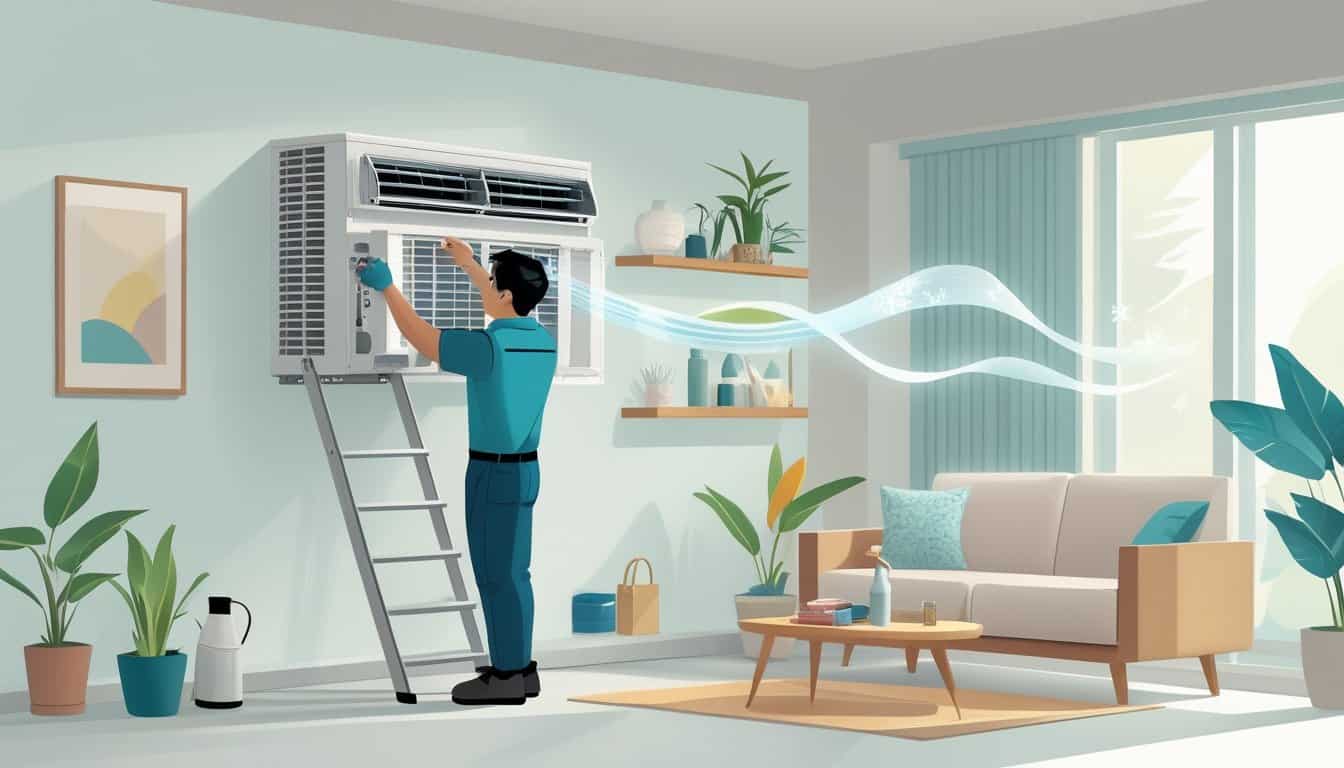
What an Air Conditioner Service Provider Does
When you engage an air conditioner service provider, you are not just paying for a quick clean-up. You are hiring a specialist to inspect, maintain, repair, and optimise your cooling system so it can perform safely and efficiently. In practical terms, this usually covers routine servicing, fault diagnosis, gas leakage checks, cleaning of filters and coils, electrical testing, and advice on whether your unit still has life left in it or should be replaced. Related source: SeekHomeFix air conditioner service providers.
The strongest advantage of using a professional service provider is that you reduce the risk of breakdowns at the worst possible time, especially in Malaysia’s hot and humid weather. The downside is that service quality can vary widely, and if you choose poorly, you may end up paying for unnecessary work or temporary fixes. That is why understanding what good service looks like matters before you book anyone.
Pros of Hiring a Professional Air Conditioner Service Provider
A reliable provider can help you protect your comfort, control running costs, and extend the lifespan of your unit. For most homes and businesses, the benefits are not just about convenience; they also affect safety, energy use, and long-term value.
Better cooling performance and consistency
One clear advantage is improved cooling performance. Dust, clogged filters, dirty evaporator coils, and low refrigerant levels can make your air conditioner work harder while delivering weaker airflow. A trained provider can clean and calibrate the system so your room cools faster and stays more comfortable.
In a commercial setting, this consistency can make a noticeable difference to staff productivity and customer experience. For households, it usually means fewer complaints about uneven cooling, strange smells, or noisy operation.
Lower energy consumption over time
A well-maintained air conditioner tends to use less electricity than a neglected one. When components are clean and properly functioning, the system does not need to strain as much to reach the desired temperature. That efficiency can help keep your monthly utility bill more manageable.
According to the U.S. Department of Energy, regular maintenance can improve system efficiency and help prevent avoidable wear that increases energy use over time. This is one of the main reasons periodic servicing is widely recommended rather than treated as optional upkeep.1
Early detection of costly problems
An experienced air conditioner service provider can spot warning signs before they become expensive failures. Small refrigerant leaks, weak capacitors, dirty drainage lines, and failing motors are often easier to address early than after the unit stops working altogether.
This preventive approach gives you more control over repair timing and budget. Instead of facing an emergency breakdown, you are more likely to manage issues in a planned and less stressful way.
Improved safety and system reliability
Air conditioners involve electrical parts, moving components, and in some cases refrigerants that require careful handling. A professional provider understands how to work on these systems without creating additional hazards. This matters if you want the unit inspected properly instead of relying on guesswork.
Beyond safety, you also gain reliability. Regular servicing reduces the chance of sudden interruptions, which is especially important if you use the air conditioner daily, run a business, or have young children, elderly family members, or sensitive equipment that depends on stable indoor conditions.
Cons of Hiring a Professional Air Conditioner Service Provider
Although professional servicing brings clear benefits, it also comes with trade-offs. You should weigh these carefully so you can choose a provider that matches your needs and budget.
Service costs can add up
The most obvious drawback is cost. Routine servicing, chemical cleaning, replacement parts, and emergency call-outs can become a meaningful expense, especially if you manage multiple units. If you only look at the upfront fee, professional maintenance may seem unnecessary.
However, the real issue is not whether servicing costs money, but whether the provider adds enough value to justify the expense. A low price is not automatically a good deal if the work is rushed or incomplete.
Quality varies from one provider to another
Not every air conditioner service provider operates at the same standard. Some are thorough and transparent, while others may use vague explanations, push extra services, or skip important checks. This inconsistency can make it difficult for you to know whether your unit has truly been serviced well.
Because of this, you should not choose solely based on the cheapest quotation. You need to assess experience, response time, documentation, service scope, and whether the provider explains the work clearly.
Convenience depends on scheduling and response time
Another downside is that you may have to work around the provider’s availability. During peak hot seasons or after major weather changes, service appointments can fill quickly. If your air conditioner fails unexpectedly, waiting for a technician may be inconvenient and stressful.
This is particularly frustrating for offices, retail outlets, or homes where cooling is essential throughout the day. Even a good provider can be hard to access immediately when demand is high, so planning ahead becomes important.
Some problems may be over-serviced rather than solved
In some cases, a provider may recommend chemical washing, part replacement, or other work that is not always necessary for the actual issue. This does not happen with every company, but it is a risk you should keep in mind, especially if you are unfamiliar with basic air conditioner maintenance.
The best way to reduce this risk is to ask for a clear diagnosis, request itemised pricing, and confirm why a particular repair is being suggested. A trustworthy provider should be able to explain the problem in simple terms.
How to Choose the Right Air Conditioner Service Provider
Selecting the right provider is just as important as deciding to service the unit in the first place. Your goal is to get competent work, fair pricing, and dependable after-service support without paying for unnecessary extras. Related source: air conditioning contractor Malaysia.
Check experience, credentials, and service scope
You should begin by asking how long the provider has been operating and what brands or system types they handle. A company with relevant experience is more likely to identify issues accurately and complete the job properly. If they specialise in residential, commercial, or inverter systems, make sure that matches your equipment.
It also helps to confirm what the standard servicing package includes. A proper scope should usually cover inspection, cleaning, basic diagnostics, drainage checks, and performance testing. If the provider cannot explain their process clearly, that is a warning sign.
Compare quotes carefully, not just cheaply
Price comparison is useful, but only if you compare like for like. One provider may quote a lower fee while excluding important checks, while another may appear more expensive because it includes a more complete service. Always ask what is covered, what is extra, and whether parts or refrigerant top-ups are billed separately.
This approach helps you avoid false savings. A slightly higher fee from a reliable provider may actually be more economical if it reduces repeat visits or future damage.
Look for transparency and clear communication
A good provider should be able to explain the issue in a way you can understand. You should know what was found, what was cleaned or repaired, and whether the system has any future risks. Transparent communication is a strong sign that the company takes accountability seriously.
You should also pay attention to how they handle questions. If the provider becomes defensive, vague, or unwilling to clarify the work, that can indicate poor service culture. A professional business should make it easy for you to make informed decisions.
When to Service Your Air Conditioner and What to Expect
How often you need service depends on usage, environment, and system condition. In general, units in homes often need periodic servicing every few months to stay in good shape, while commercial systems or heavily used units may need more frequent attention. If your unit is exposed to dust, cooking fumes, renovation debris, or constant operation, it may need closer monitoring.
During a typical visit, you can expect the technician to inspect the indoor and outdoor units, clean filters and coils, check drainage, test cooling performance, and look for signs of wear or leakage. A more detailed service may involve chemical cleaning or component replacement if the system is heavily clogged or underperforming.
You should also watch for signs that service is overdue: weak airflow, longer cooling times, unusual odours, water leakage, louder operation, or a sudden increase in your electricity bill. These symptoms do not always mean a major fault, but they do mean your system needs attention sooner rather than later.
Making the Most of Your Service Provider Relationship
Once you have chosen a trustworthy air conditioner service provider, the relationship should become easier to manage over time. Keep records of servicing dates, repairs, and any recurring issues so the technician can track patterns and recommend better solutions. This is especially useful if your unit repeatedly develops the same fault.
You should also ask for practical maintenance advice between visits, such as how often to clean filters, what warning signs to monitor, and when to switch off the unit for inspection. A good provider does more than fix problems; they help you understand how to prevent them.
In the long run, the right provider can save you time, reduce surprises, and support better decision-making about repair versus replacement. The relationship works best when both sides are clear about expectations, costs, and the condition of the system.
Conclusion
Hiring an air conditioner service provider has clear pros and cons. On the positive side, you gain better cooling, lower energy waste, earlier fault detection, and improved safety. On the negative side, you must manage cost, service quality differences, and the possibility of unnecessary work if you choose carelessly.
If you want the best result, focus on experience, transparency, and proper service scope rather than price alone. With the right provider, your air conditioner will likely run more efficiently, last longer, and give you fewer headaches in the heat.
1 U.S. Department of Energy, Energy Saver: Maintaining Your Air Conditioner — https://www.energy.gov/energysaver/maintaining-your-air-conditioner